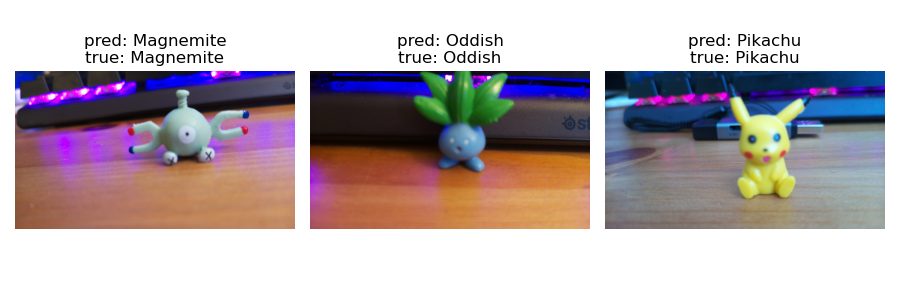
IRL Pokédex
Handheld Pokédex that runs a custom CNN + TTS stack on-device to test edge inference and labeling workflows.
Collecting + fine-tuning
Started with head-on captures to seed the first dataset, then folded each batch into a fast labeling + fine-tune loop.
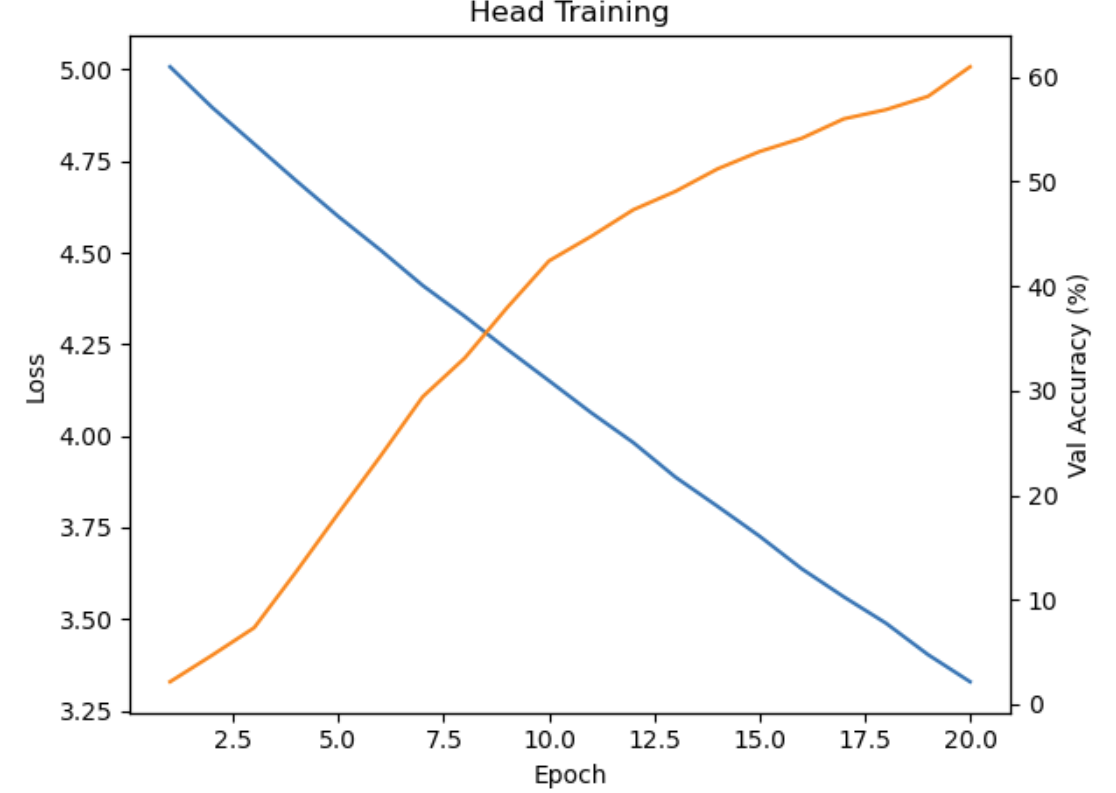
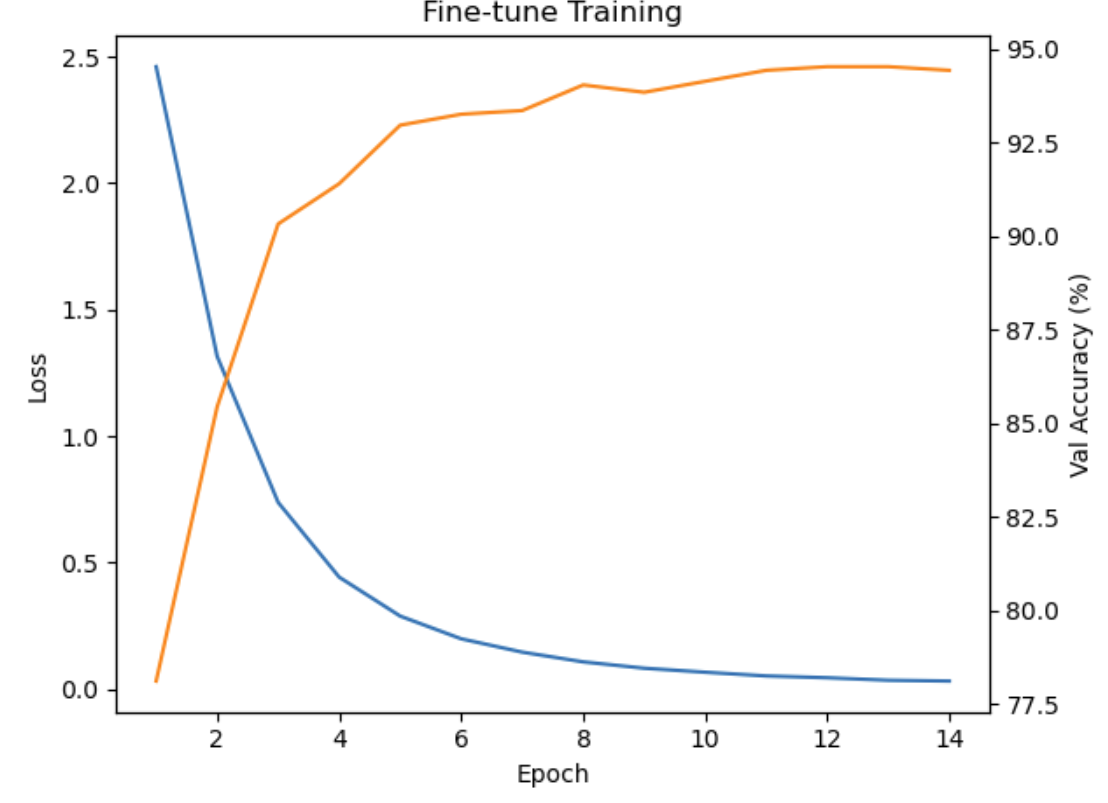
Each batch moves through a lightweight labeling tool that tracks per-class balance and highlights confusing pairs (like Pikachu vs Raichu). The next run regenerates a balanced split and exports an ONNX model in minutes.
- Quantized CNN fine-tuned on self-shot photos.
- Exports ONNX for the Pi; no cloud calls.
- Fresh captures automatically expand the next dataset.
On-device inference + TTS
Frames stream into a short history buffer; the moving average gates speech so the voice stays steady. A local TTS model with a custom lexicon pronounces names correctly even when offline.
- Denoise + resize before inference keeps predictions stable in low light.
- Speech triggers only after the confidence buffer clears a threshold.
- Top class and confidence render on-screen for quick debugging.
Hardware build
Stack
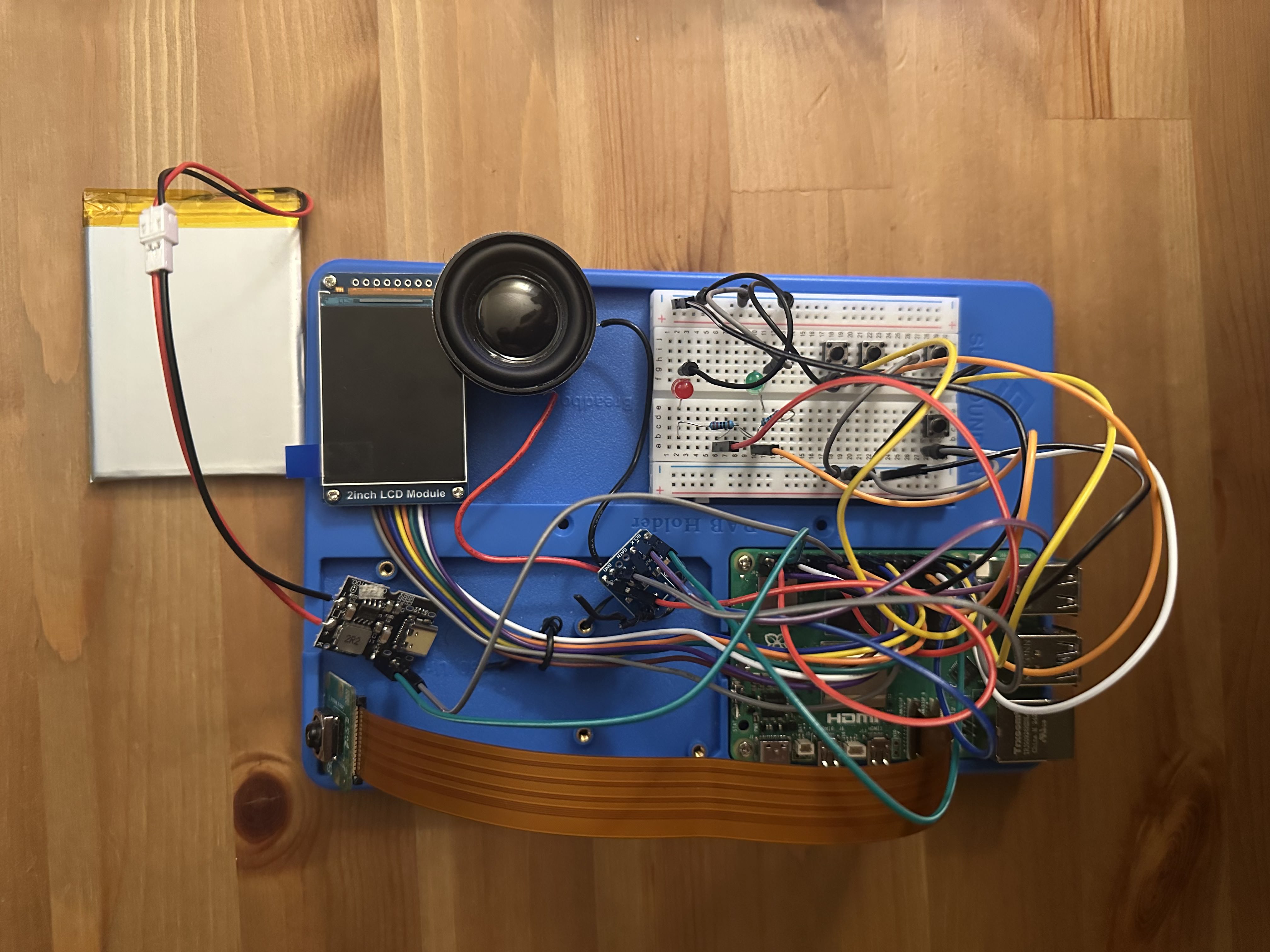
Pi 4 + USB camera; ONNX Runtime for the quantized CNN; custom lexicon bundled with the offline TTS voice.
Why buttons
Physical capture + playback keep the loop usable when the UI is off or the device is running headless.
Live capture
On-device audio + video